
Asking a Full-Time Pitch Tester: How He Identified the Real Cause Behind 4 Ligament Injuries
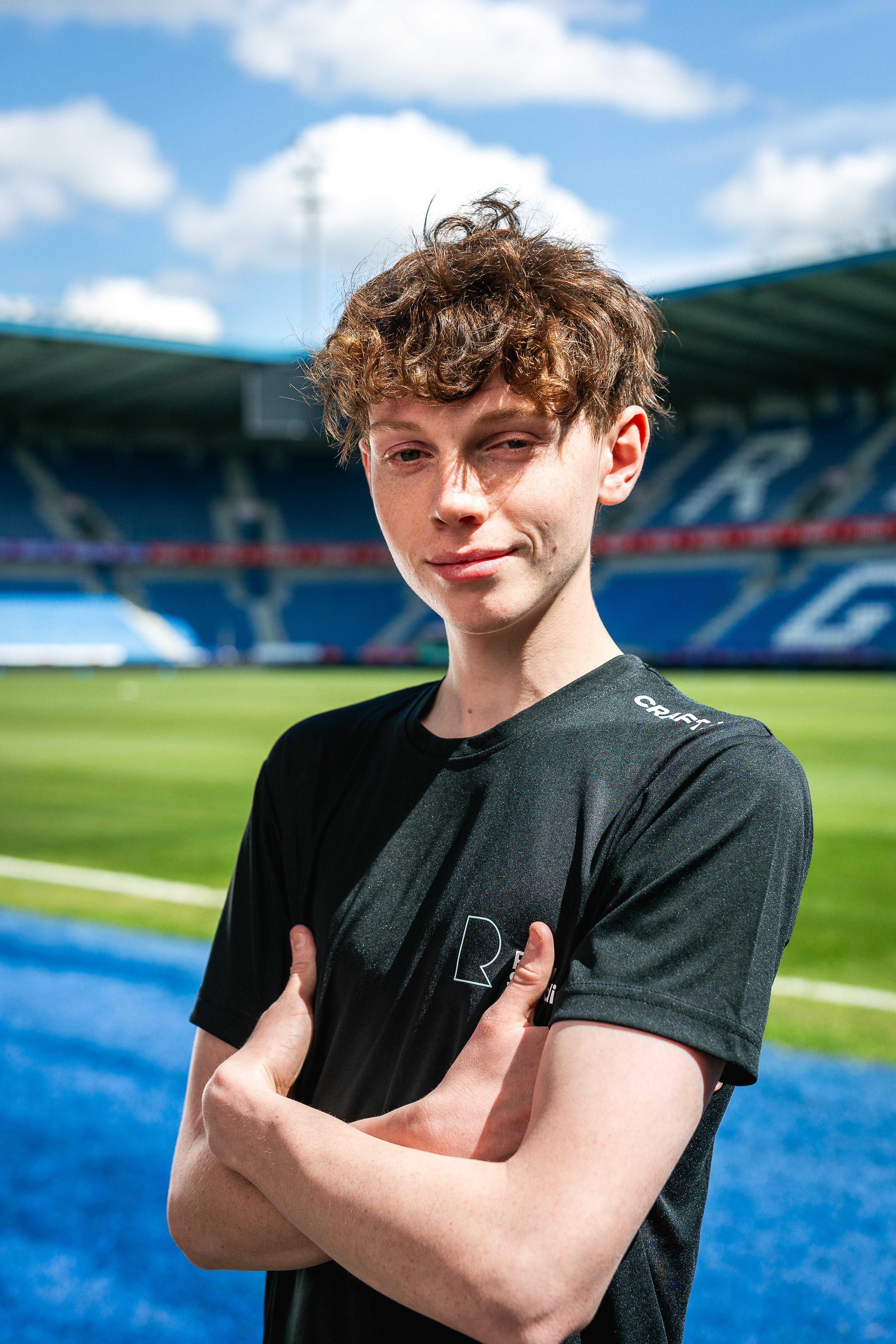

Raw Stadia's Owen on full-time playing surface testing, data collection, and how he applied it to discover the real cause of player injury
We sat down with Owen to get a closer look at what a club can experience from having a full-time pitch tester, and found some interesting applications of data, ranging from planning to reducing injury risk.
Q: Owen, you've spent the last two seasons working full-time as a pitch tester at a professional football club. Can you tell us what that experience has been like?
A: It's been two seasons building a strong, consistent, unbiased database across every site and every pitch at the club. In practice, that meant every pitch was tested at least once a week for impact, traction, moisture, and density, with extra tests before every first team and U23 training session. I also had daily interactions with the heads of the grounds department and all first assistants to optimize the testing schedule and ensure all playing surfaces were tested in their chosen state. Tests were also conducted around maintenance practices, such as deep-tine aeration, to view the effects it would have on a pitch.
Q: How has the grounds team's planning been affected?
A: Thanks to an expansive database from consistent testing, a full-time tester can assist in the development of a data-driven maintenance schedule. Data collected can be used to best determine optimal times to aerate, irrigate before a game, fertilize, and much more. If you’re mirroring a first-team training pitch to a stadium pitch, this data can help you understand the necessary adjustments needed to best prepare a pitch.
A full-time tester can create their own plan to best suit all pitch managers to optimize pitch quality, without taking a member of their team away from important projects. My list of priorities would be as follows: first-team, stadium, full-time academy, match pitches, and then the younger age groups. My week-by-week plan would consist of 2-3 stadium visits in a week, Mondays, Fridays and matchdays, and a visit to the women’s training ground on Fridays. With this many pitches, it is important that data across all pitches can be consistent.
Q: Why do you believe consistent data collection is important?
A: Because unbiased data collection is crucial for a club to best understand the playing surface. In a few cases, members of staff, particularly at the stadium, have completed tests with varying results to my tests. Whilst the devices themselves give consistent data readings, the positions of tests can vary results. This has been particularly the case around areas such as goal mouths, where I would go for the potentially more accurate reading; some people have tested metrics such as impact and density wide of the scuffed goal mouth area to give the report a better result.
This can hinder the refining of a playing surface as the perception of a playing surface has changed; this inconsistency can then lead to maintenance practices falling down the priority list, allowing the issue to linger.
Q: You mentioned reporting - can you tell us more about that, and how the club benefits from it?
A: On a weekly basis, I would send at least 4 reports out. Weekly reports for each training area, as well as one for all match pitches, would go out, with each report including all the data for the stadium pitch. Each report consisted of an average data reading for all pitches and metrics, all calendar data (usage and maintenance), and any potential feedback needed. On top of this, 2-3 times per week I would discuss the results of the pitch tests with first assistants or pitch managers.
Being a full-time tester has allowed me to feel part of the team in the club. Being in team WhatsApp chats has meant any member of staff has been able to contact me asking for data measurements when it's needed. Having a full-time tester has helped the club numerous times, even out of hours when a quick report has been needed to best convey a message across departments to help with investigations into injuries.
Q: Injuries? This is an interesting topic - can you tell us more about that investigation?
A: That's actually one of the clearest examples of why this role matters, why testing matters. At my former club, we were able to pinpoint where injuries were coming from thanks to the use of Raw Stadia’s data collection. We had a pattern of 4 injuries related to lower leg ligaments and ACLs. Fingers were immediately pointed towards the pitch as all injuries occurred on the same pitch. Initially, this looks like a reasonable conclusion; however, a bigger investigation was needed to see if boot selection advice was followed by players.
This was crucial in the defense of the playing surface, as we were able to determine a correlation between the players who received the injuries and the footwear being used. All players were wearing a soft ground male boot, and all the injuries were to players on the women’s team. We could then align the higher-traction boot on a high-traction pitch to potentially be the issue.
With the boot of choice being a male boot, the layout of studs remains the same between all sizes. The likelihood of the players having smaller feet resulted in the stud pattern on the sole of the shoe being condensed, thereby increasing the contact area of the studs and raising the traction of the boot.
Q: It's clear injury reduction benefits player health and the club's investment in the player; are there other investment benefits from pitch testing?
A: Definitely, as mentioned before, the investment into Raw Stadia can be directly correlated with keeping players safe and reducing injury risk. However, other investments can be made using data. With a consistent database, evidence of pitch issues can be presented to superiors along with the correct amendments to devise plans to optimize a playing surface. Whether that’s proving the need for equipment or validating the need for a pitch reconstruction to ensure the surface can be in its optimal state all year round.
I have seen examples of this with natural pitches being used three to four times per week. The goalmouths were seeing a heavy loss in grass density; in turn, increased slipping was seen as the rotational traction had decreased, reducing playability, potentially leading to keepers conceding more goals as they have lost some of the momentum of their initial jump. The solution to this was to stitch the goal mouths, helping the grass survive and ensuring the surface stays firm to give the keepers as much of an advantage as possible.
Q: There's clearly an overlap between the benefits for the grounds team and performance team; do you maintain a connection with performance, or other departments too?
A: Yes, cross-department relationships are crucial for a football club to run smoothly. An understanding of playing surfaces between coaches, performance staff, grounds staff, doctors and boot-room staff brings together a strong base for a football club to stand on.
A full-time pitch tester can associate themselves with all these areas of staff to build proper relations to best enhance a club’s performance. Meetings and emails of reports are key for this to work. In my previous job, match-day reports were sent roughly 3 hours before kick-off, after a 5 hour pre-kickoff test had been completed.
Q: Are there other benefits for a club in having a full-time tester?
A: One thing people don't always think of is having a direct line to Raw Stadia itself. With a full-time member on site, you can have an instant string of communication with us.
We do use our pitch testers to trial new products and project ideas. We can also work alongside a club on micro-projects tailored to your choosing, for example, testing the difference between a ball’s rolling distance and speed at different times after irrigation to determine the optimal time before kick-off to apply a cycle.
Q: Any final thoughts you would like to add?
A: Just that the value of a full-time tester can be a massive benefit to a club, and whilst profit isn’t visible, it can be seen in alternative ways with the reduction of injury risk resulting in player wages getting spent on active players, not being lost on a sidelined player due to an injury from the surface.
Curious what a full-time pitch tester could look like for your club? Get in touch!
Email: info@rawstadia.com


Comments